
What Are We Really Saying When We Say ‘Sorry”?
I’m writing this back in Cairo after two weeks of barely seeing pavement.
My view at Sunset Nile Traffic October 4th and then my view 24 hours later at sunset in Cairo Traffic along the Nile October 5th.


I’ve set up my new home base in Luxor, and I’m here for a few days—staying with a friend, seeing some people I love, running errands and stocking up on espresso to take back south with me.
It’s strange being back. Not because I’ve been gone very long, but because I’m coming back differently.
Cairo isn’t home base anymore. I’m visiting.
I think of Luxor as an old-world capital that still holds so many secrets. There is something about being there that feels like descent—revelations, truths, filtration. Even the geography feels like it participates in it. The heavy limestone holds you, and as you descend south the landscape changes completely.
Siwa is something completely different.
Read about my last trip to the Siwa Oasis :
ISIS ORACLE Tour 2026.
In a few days I’ll make the long road west across the Western Desert to Siwa Oasis for a yoga retreat. It will be my third time there this year, but this time carries a different significance for me.
My obligations are simple: teach one yoga class a day for five days.
Outside of that, I have time.
Time to rest in the hot springs.
Bury myself in the salt.
Stare into the endless desert sky.
After the last couple of months, the cleansing nature of Siwa feels particularly significant.
Because after months of turbulence, things have started to calm in some ways and stabilize.
It’s far from over yet.
As someone with a very expressive face, I watched the muscle tone and colour drain from it for months. I could see the literal life force leaving my body.
So to experience moments of joy again—even at first, when they struck me by surprise—has been kind of incredible.
Not only feeling it in myself, but having people from around the world who have absolutely no idea what my situation is write to me and say:
Wow. You just exude pure joy.
There’s something a little ironic about that.
But it also makes me feel like I’m in an active state of transformation.
Something is moving again.
And quiet has a funny way of making room for things.
Now, finally, I’ve had some time to sit. To not be on the move. And I’ve been catching up with friends.
I have this incredible, sprawling network of people scattered across countries and time zones, living completely different lives. With some of them, we might only properly catch up every six months. But when one of us can see that things have become particularly turbulent, we make the effort to find each other.
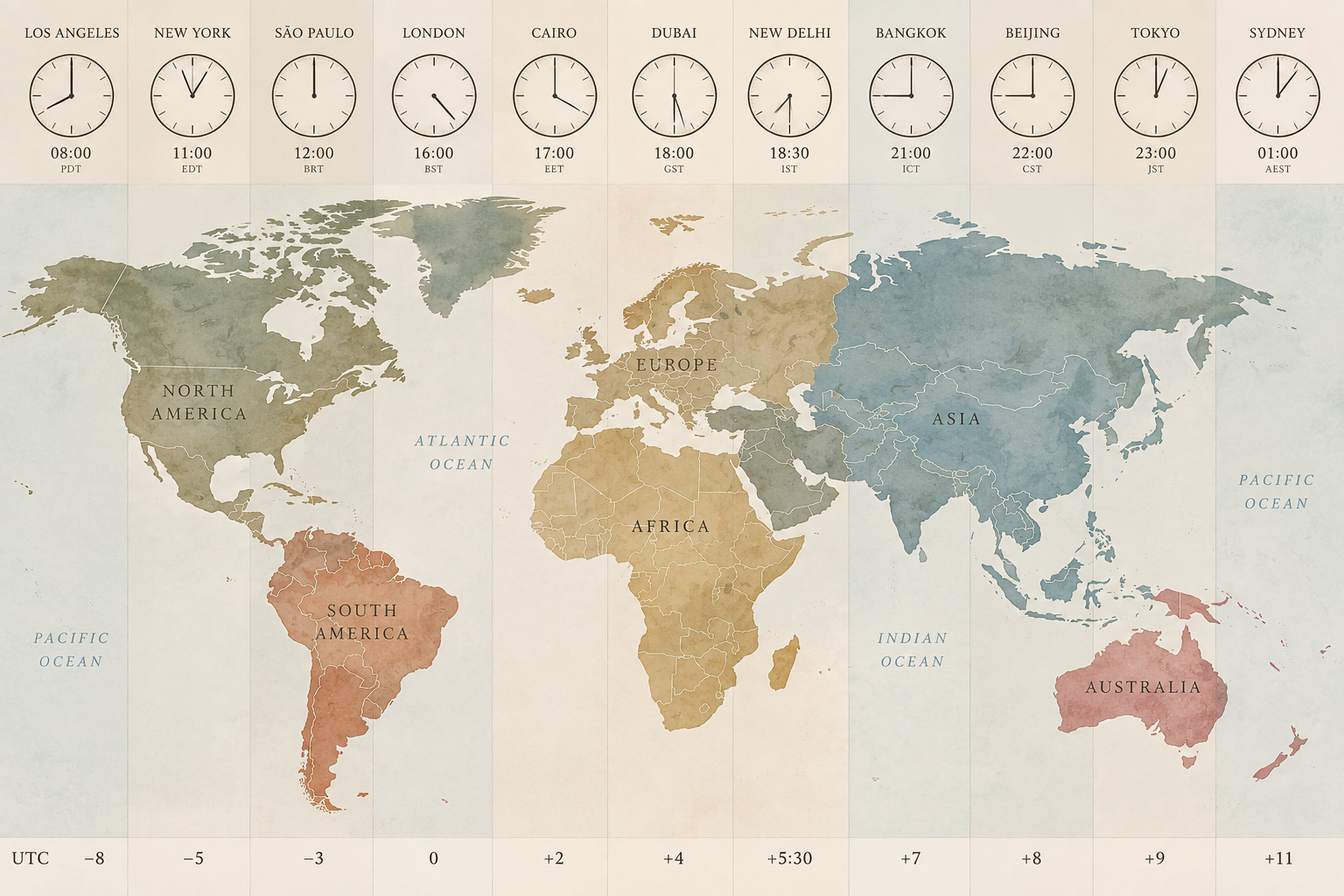
Friends in all timezones xoxox
And their lives haven’t stopped either.
Some of my friends have undergone cancer treatments.
Some have considered divorce.
Some have watched careers they spent years building change underneath them.
We’re all busy living inside our own little universes.
And lately, something keeps happening in these conversations.
My close friends tell me how deeply, deeply sorry they are for what I’ve been through.
And almost every time, I brush it off.
Or I tell them how much better I’m doing now.
And I really am.
I have colour in my face again.
I have a pretty morbid sense of humour, and there was a while there when I didn’t even have that.
I’m also almost constantly in an active state of metacognition—watching myself do things, wondering why I’m doing them, and trying to catch myself before I automatically respond if maybe that response isn’t serving me.
So I started catching this one.
Why do I keep brushing off people’s condolences?
And when I turn it around and think about the times I’ve told someone else, I’m so sorry, what am I actually trying to say?
When I put my hand over my heart and tell someone:
I am so, so sorry you’re going through this.
What am I actually trying to give them?
I think I’m trying to say:
Oh man.
I see this.
I see that this is enormous.
And holy shit, I do not have a solution.
I can’t fix it.
I can’t take it away.
But you don’t have to pretend with me.
Maybe that’s what condolences really are.
Which is interesting, because growing up in Canada, the word sorry practically has no value.
Canadians are constantly apologizing for simply existing.
Sorry for standing here.
Sorry for reaching past you.
Sorry for speaking.
Sorry for taking up three inches of space in the grocery store aisle.
It drives me crazy now.
Maybe particularly after living in Cairo, where you have to absolutely assert your existence. Cairo is not particularly interested in whether you feel comfortable taking up space. You either learn to occupy it or somebody else will.
Then I go back to Canada and watch people so passive they sometimes seem to be negotiating whether their own existence is even okay inside their own heads.
Sorry.
So what happens when that same word suddenly has to carry something enormous?
I am so sorry.
Because this kind of sorry isn’t an apology at all.
It’s witnessing.
It’s someone saying:
I see what happened to you.
I see that this is heavy.
I don’t know what to do about it either.
And you don’t have to make it less heavy for my benefit.
Maybe that’s why accepting condolences is harder than I thought.
Because accepting them means not immediately making the other person comfortable.
Not saying:
Oh, it’s okay.
Not immediately explaining:
I’m doing much better.
Not shrinking what happened because I survived it.
Maybe sometimes the answer really is just:
Thank you.
And allowing the words to land.
If somebody who loves me is trying to give me a little bit of their strength, why am I so quick to hand it back?
Maybe solidarity only works when there is someone willing to offer it and someone willing to receive it.
And maybe that exchange doesn’t have to accomplish anything.
When someone says:
I’m so sorry.
Perhaps they’re not asking us to do anything with those words.
Maybe they’re not trying to fix us.
Maybe they’re not even trying to make us feel better.
Maybe they’re simply saying:
It’s okay for you to just be sad.
And maybe that is what I have been missing.
Maybe accepting someone’s condolences isn’t agreeing that everything is terrible.
It isn’t giving up the joy that has started to come back.
It isn’t choosing grief over moving forward.
Maybe it is simply allowing another person to stand beside you for a minute and acknowledge:
Yeah.
That was fucking hard.
And perhaps receiving that is its own practice.
Not explaining.
Not minimizing.
Not reassuring.
Not immediately turning toward what comes next.
Just:
Thank you.
And maybe leaving enough quiet after it for something to actually be received.
