My 2026 spring tour has wrapped..... Heres a little over view recap
Tour Journal · 2026
ISIS Oracle
Fourteen days. Five different worlds within the mother of the world — beginning in Cairo, ending in the arms of Aswan.
Cairo · Siwa · Luxor · The Nile · Aswan
Cairo → Siwa → Cairo → Luxor → The Nile → Aswan
There are journeys that take you somewhere, and then there are journeys that take you back — back through time, back to something ancient inside yourself. The ISIS Oracle tour was the second kind. Two weeks ago, a remarkable group of seekers flew in from California and together we entered one of the oldest living civilizations on earth. What followed was not a vacation. It was an initiation.
The tour takes its name from two sacred pillars that act as portal and threshold: the Oracle Temple at Siwa, where Alexander the Great once knelt to receive divine counsel, and Philae Temple in Aswan, the last great sanctuary of Isis — goddess of magic, healing, and the art of putting broken things back together. But between those two poles lay five entirely different worlds, each one complete in itself. Egypt is worlds within a world. But Egypt is not for beginners.
Chapter One
Cairo · First Night Under Khufu
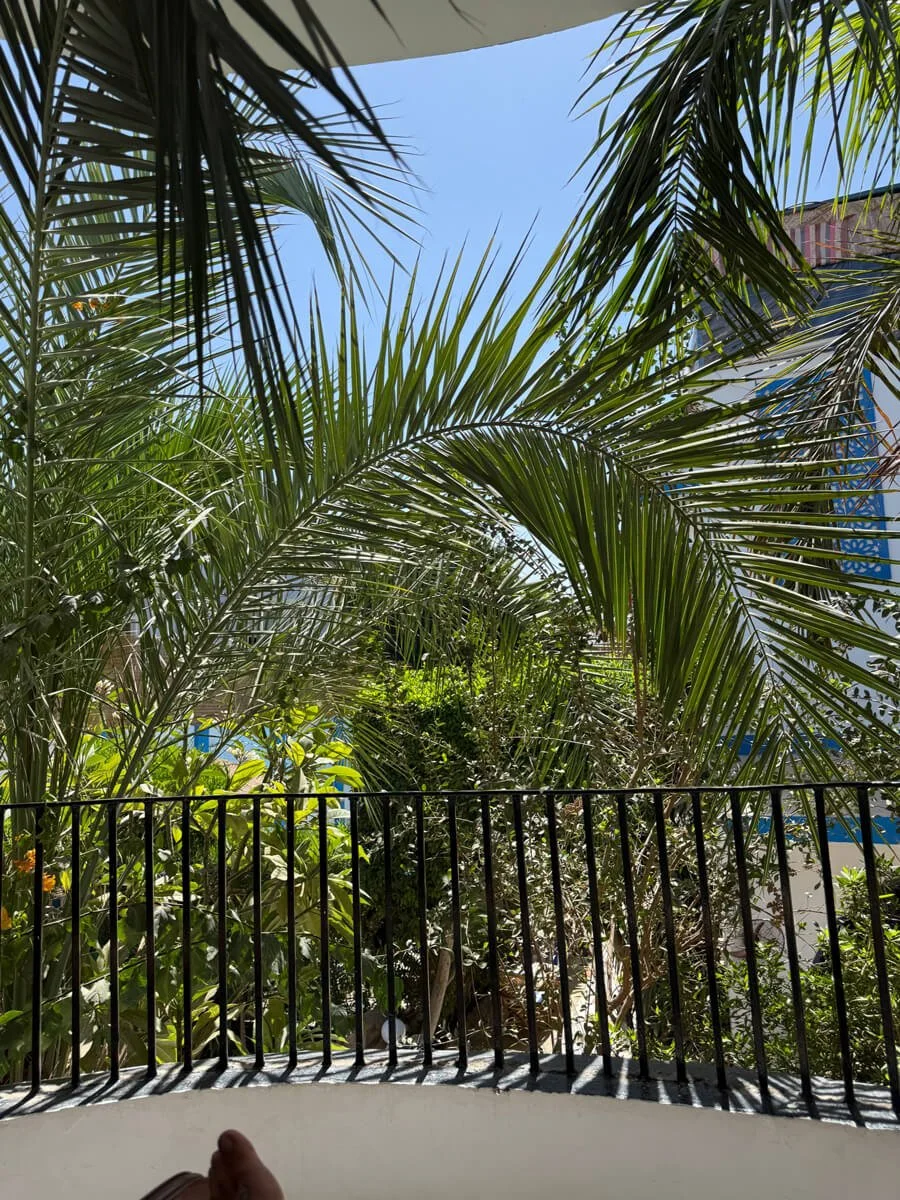
We started where I live — Cairo — and I brought my guests straight to one of my most consistent haunts in this city, the House of Kheops, sitting in the direct shadow of the Great Pyramid of Khufu itself. There is nothing quite like a first night in Cairo when the pyramid is literally outside the window. The scale of it in the dark, lit from below, utterly silent — it sets the tone immediately. Sleep, if it comes at all, feels ancient.
The next morning we opened the tour properly: breakfast at the pyramids. Coffee in hand, the Giza plateau still cool and quiet before the world arrives, the light coming sideways across the stone. I have seen this view more times than I can count. It does not get ordinary.
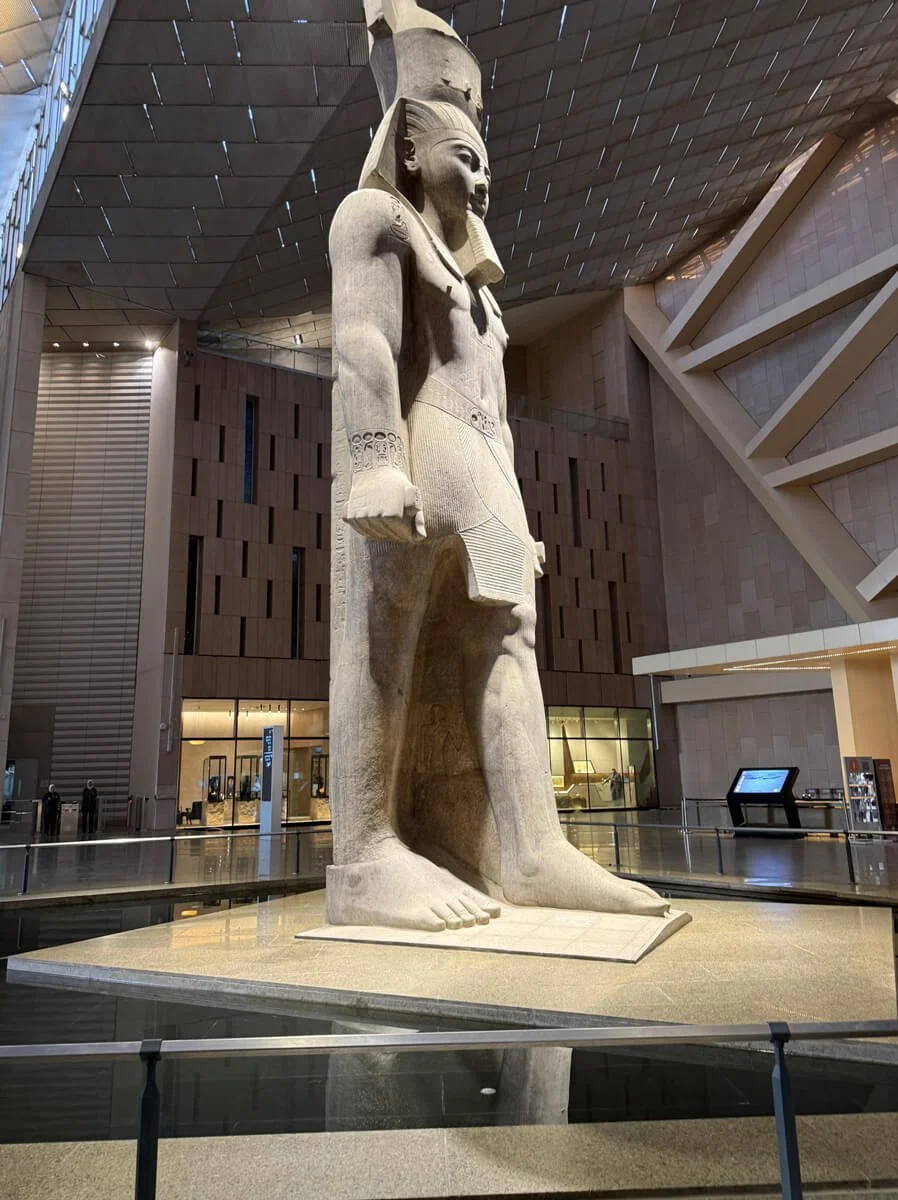
That afternoon we made our way to the Grand Egyptian Museum — my first visit since the grand opening last November, and still breathtaking on return. My guests needed to see this museum. When the news of the grand opening spread across the world, the hype was completely justified — you should see it. The collection of Tutankhamun alone would be enough for any museum on earth. His gold funeral mask, his gilded chariot, his alabaster canopic jars — room after room of his treasures, and that is just one floor. The Grand Egyptian Museum is unlike anything else, and I say that as someone who has spent a lifetime in this country.
“Egypt is not for beginners. And there is nowhere else on earth that comes close.”
Chapter Two
The Long Road West · Siwa, the Dreaming Oasis
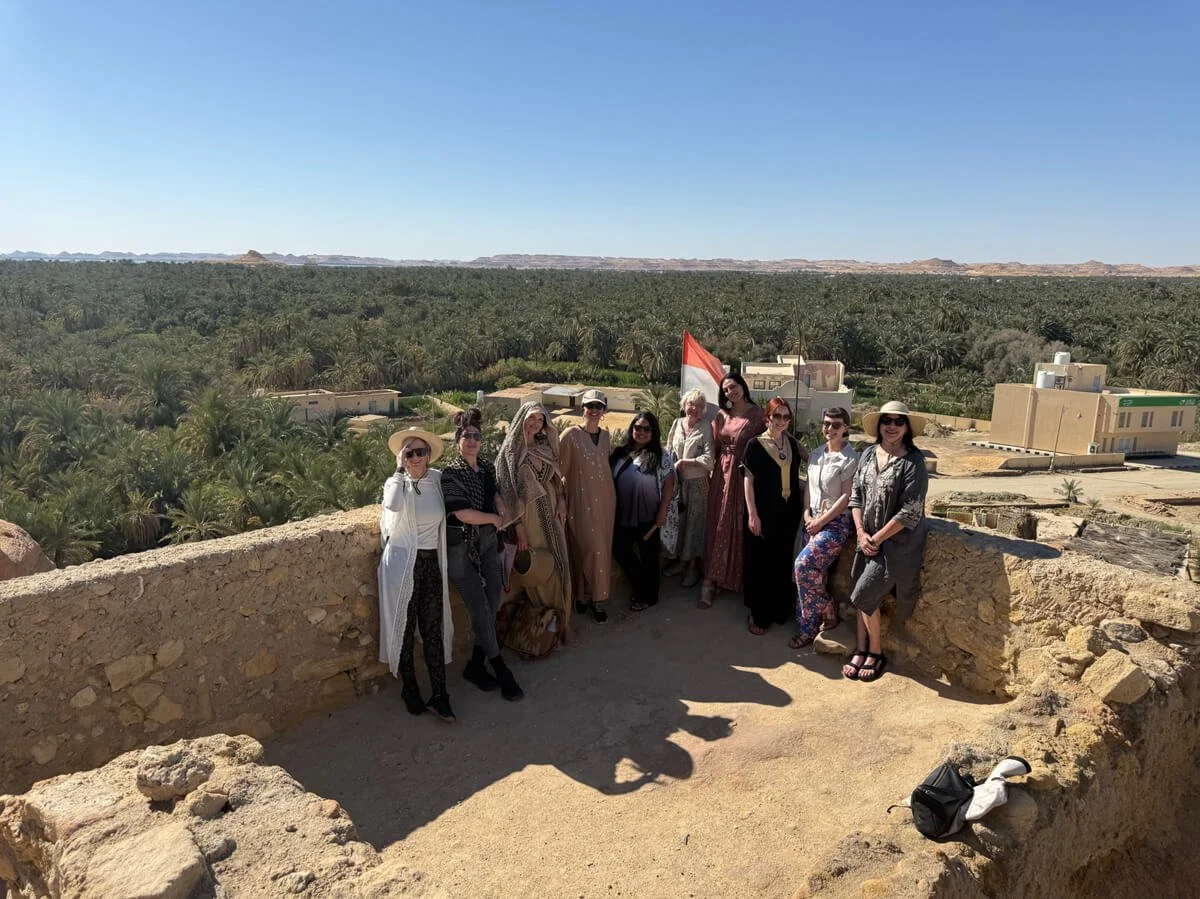
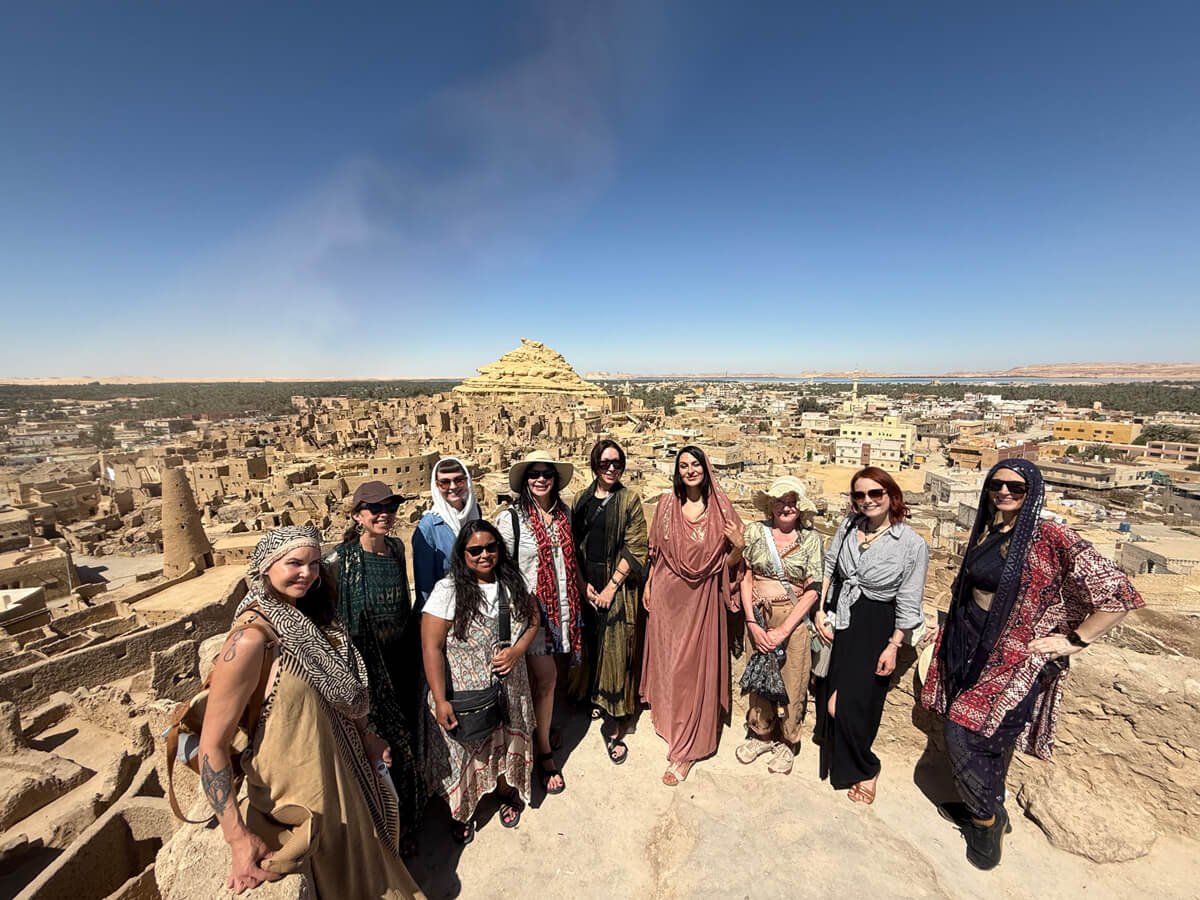
Before sunrise we loaded the bus and headed west along the Mediterranean coast. This drive is always an education. We passed through the extraordinary construction site that is New Alamein City — Egypt's ambitious fourth-generation mega-development rising directly from the coastline with towers, a 14km corniche, universities and an opera house — a city being born in real time. The whole stretch of the Egyptian North Coast is transforming at a pace that is genuinely staggering, even to those of us who live here. Then we turned south from Marsa Matrouh and descended — literally descended, down to approximately 19 metres below sea level — into the Siwa Oasis, a deep depression in the Western Desert cradled between the Great Sand Sea and the Libyan border. The shift from the Mediterranean to remote desert happens in a matter of hours and is completely disorienting in the best possible way.
The morning after we arrived, before anything else, we rolled out our mats. Yoga to open the body and prepare to receive what Siwa has to offer — intentional, grounding, necessary. You want to be fully present for this place.
Four days in Siwa. 4 days We earned every one of them.
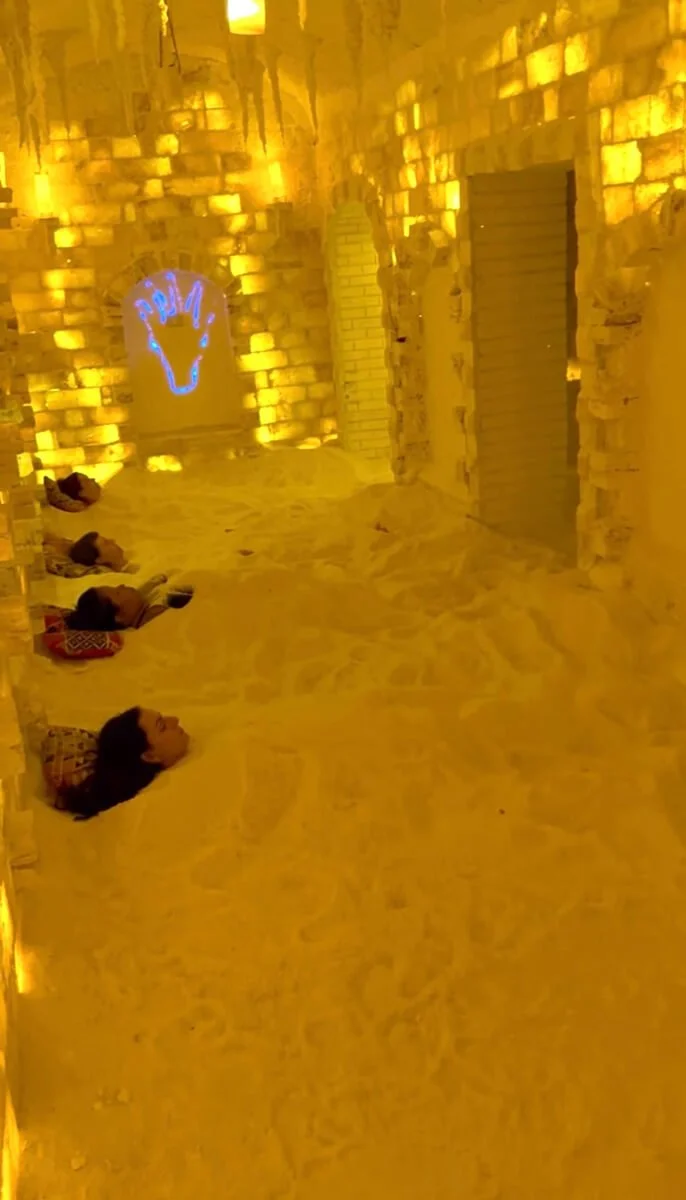
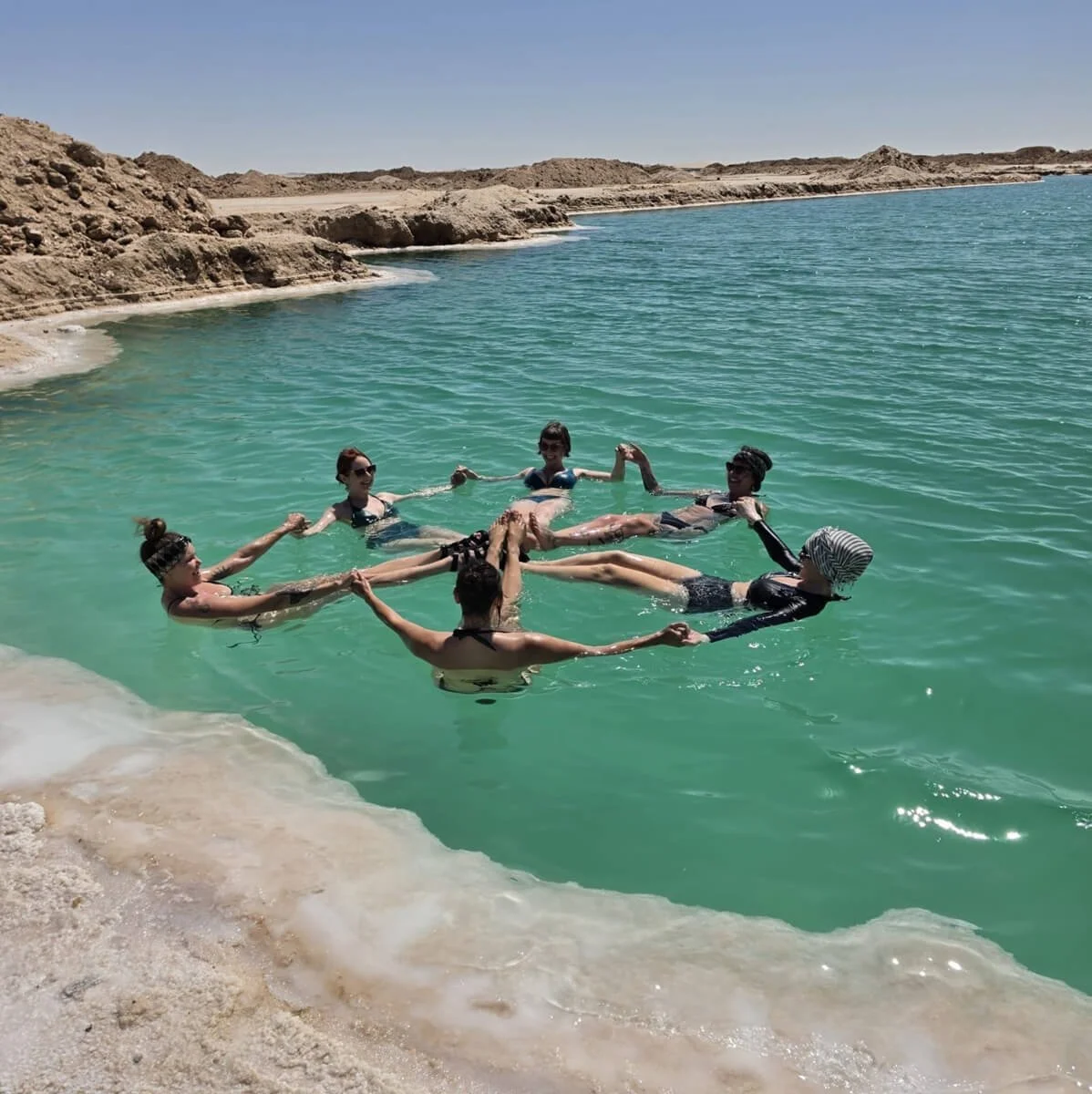
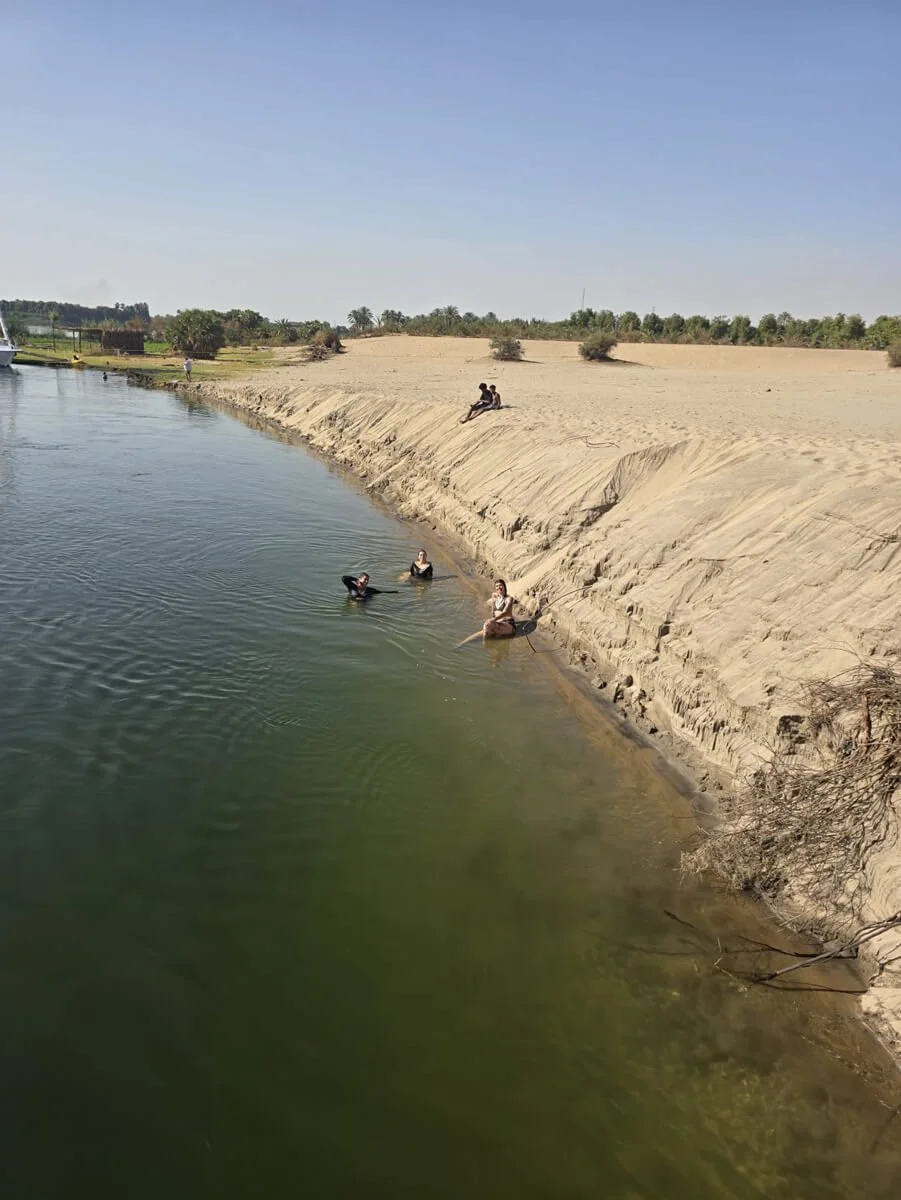
We soaked in the hot springs that bubble up from ancient aquifers, mineral-rich and deeply restorative. We floated in the salt lakes — water so dense your body simply refuses to sink — and lay on our backs beneath a sky uncontaminated by light pollution, watching the Milky Way wheel overhead. And then there was the salt cave: being buried in salt is not an experience easily translated into words. The weight, the stillness, the warmth seeping into your bones — something releases in there. People emerged changed. That is all I will say.
Siwa belongs to the Siwi people — a distinct and remarkable community with their own ancient Berber language, their own traditions, and a relationship to this land that long predates anyone passing through. I will be writing much more about the Siwi in future posts because they deserve far more than a paragraph, and I want to get it right.
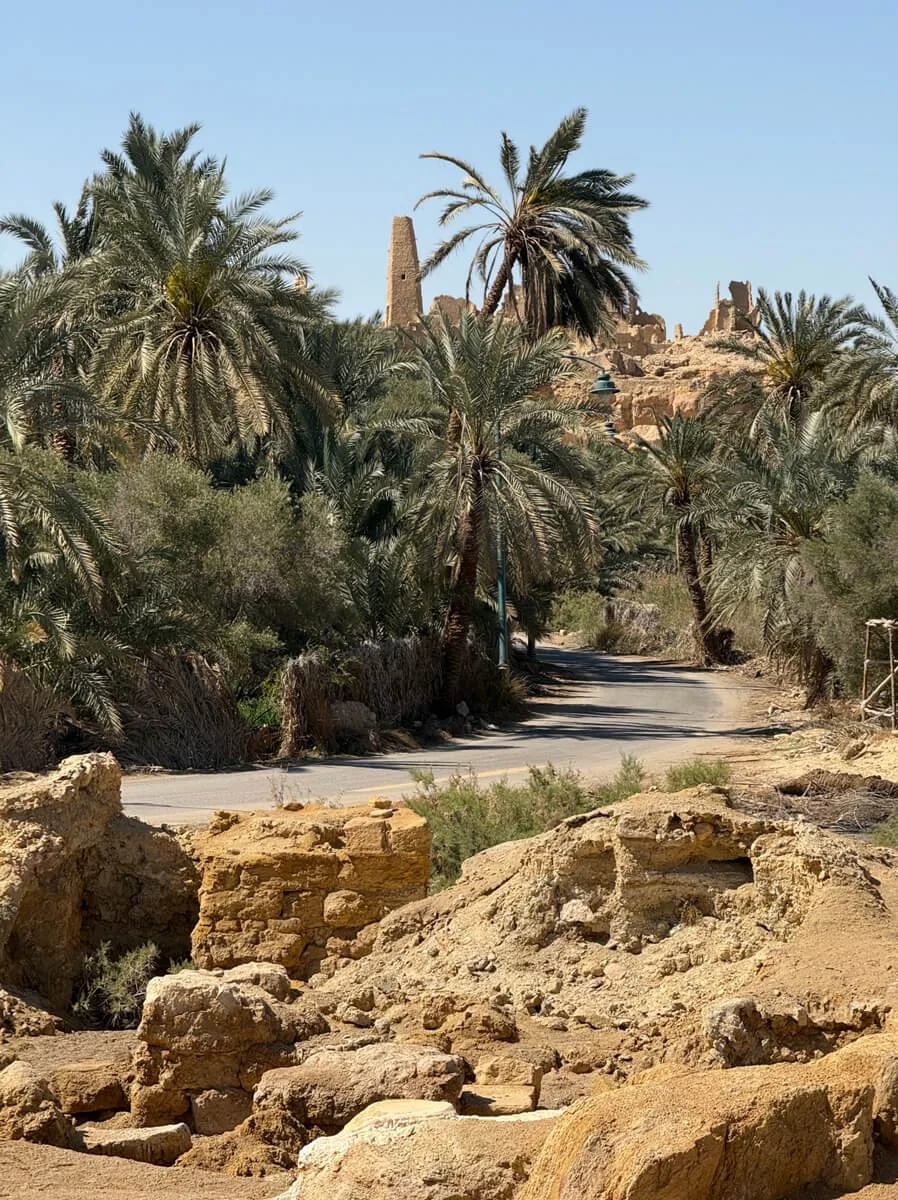
The Oracle Temple was the reason Alexander the Great crossed the desert — weeks of travel through killing heat, driven by the need to know something only this place could tell him. Standing in those ruins in the deep desert quiet, it is not difficult to understand the compulsion. Some questions demand that kind of pilgrimage. We each arrived with our own.
Interlude
Cairo Transit · Tahrir Square & Zamalek
We transited back through Cairo for one night — passing through Tahrir Square, that charged and historic heart of the city — before the group descended on one of our favorite boutiques in Zamalek for what can only be described as a rampant shopping spree. Zamalek does that to people. You go in for a look and come out with your arms full. No regrets whatsoever.
Chapter Three
Upper Egypt · Luxor, Where We Always Feel at Home
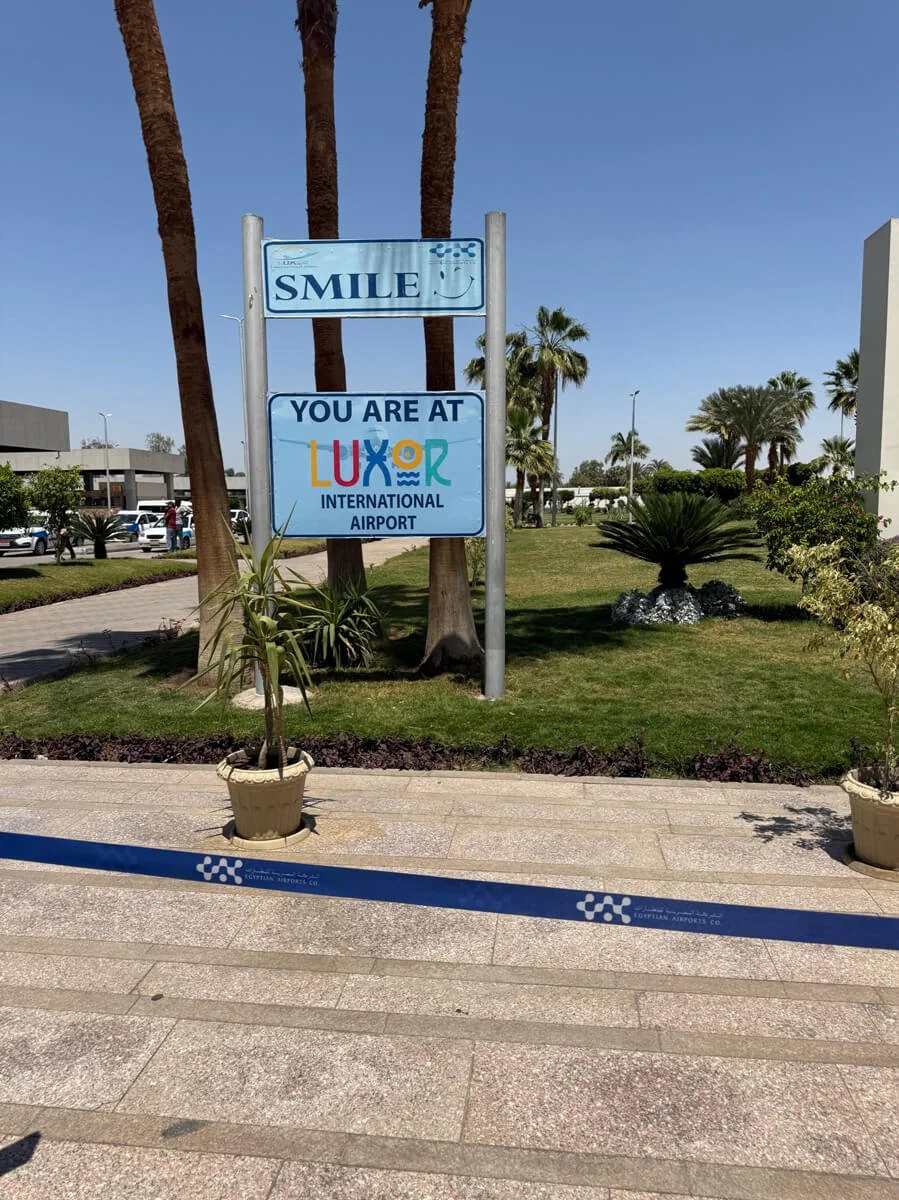
We flew south to Luxor — ancient Thebes, city of a hundred gates — and I want to say this clearly: I have deep connections in Luxor, built across many years. When we arrive here, my groups are never tourists passing through. We are welcomed. That changes everything about how a place opens itself to you.
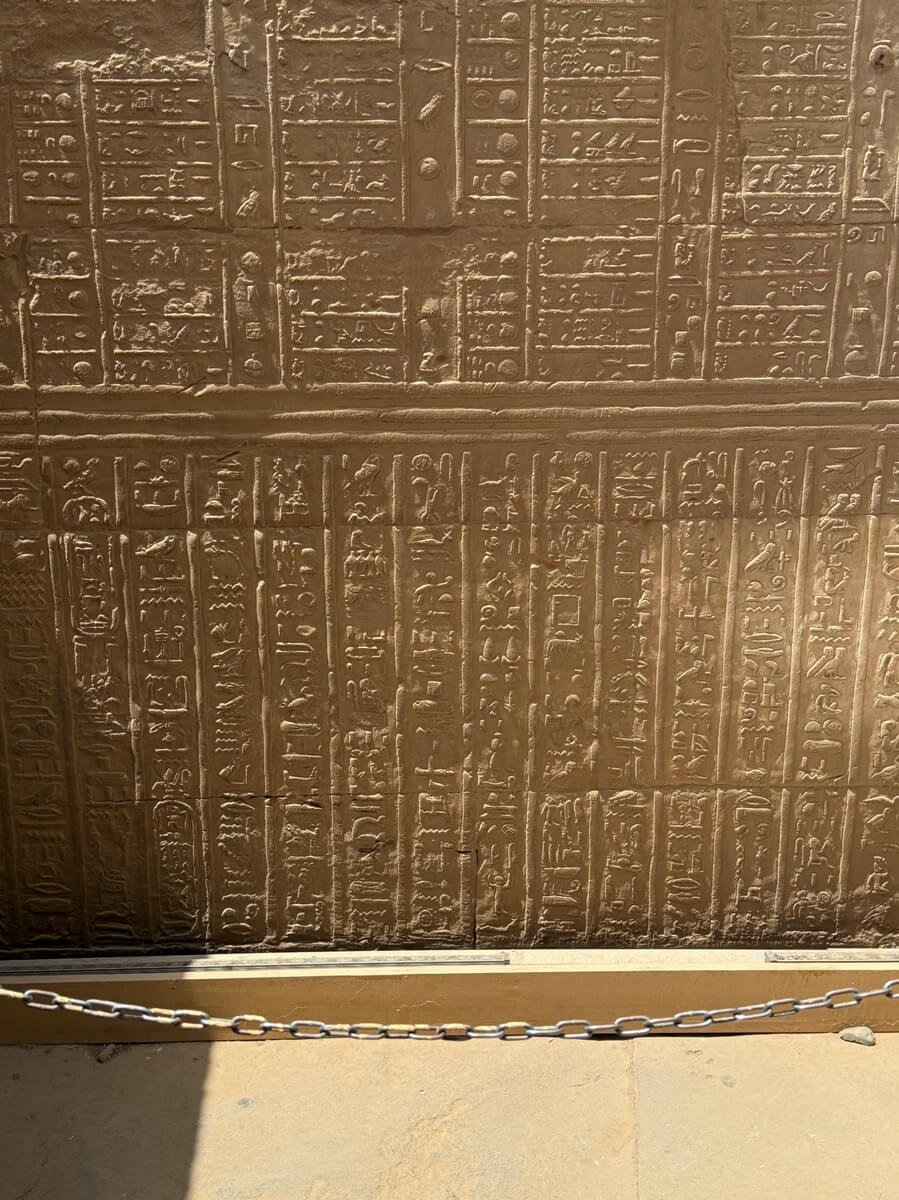
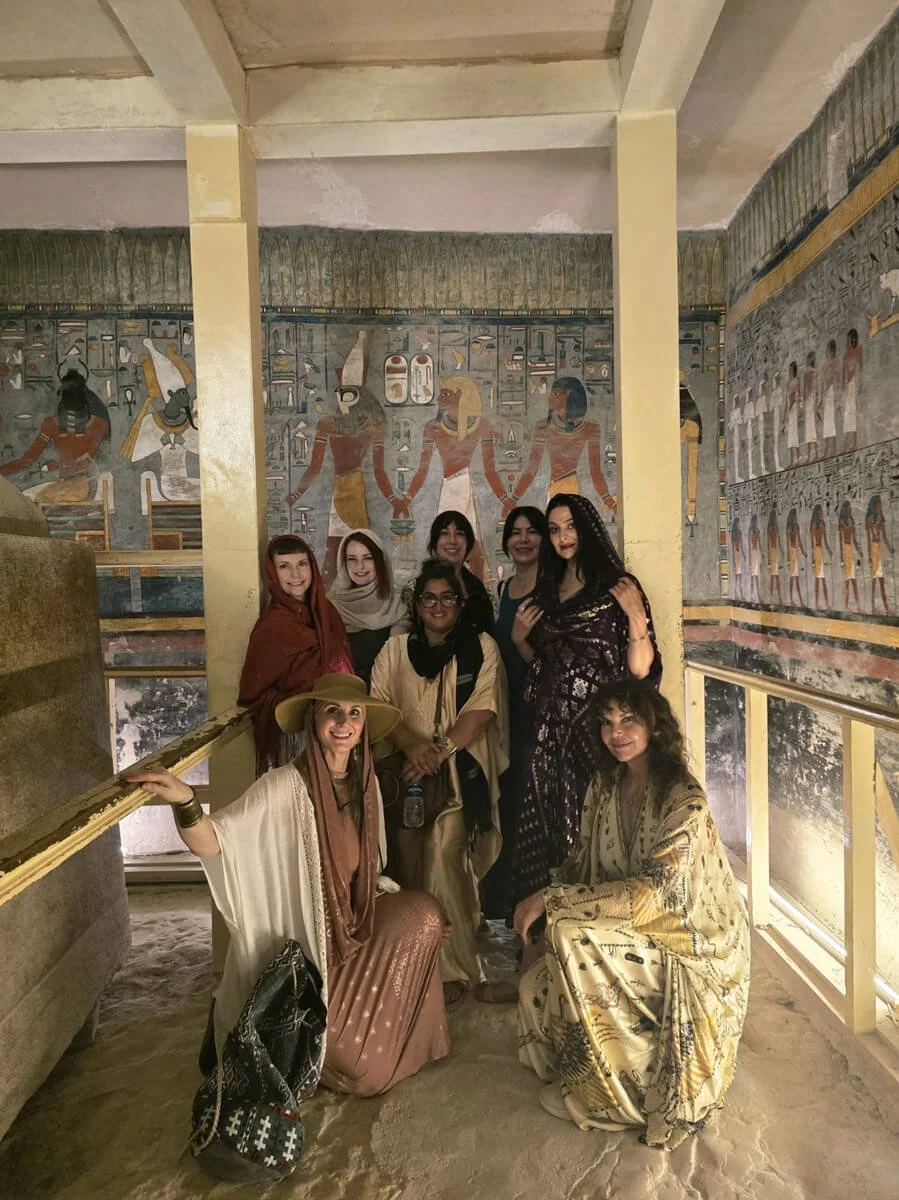
In the Valley of the Kings, we descended into the tombs of Ramesses VI and Seti I — chambers painted with such vivid, obsessive precision that you forget the three thousand years separating you from the hands that made them. The colors hold. The intention holds even more. These were not decorations. They were technologies of the afterlife, and standing inside them you feel that purpose still fully operating.
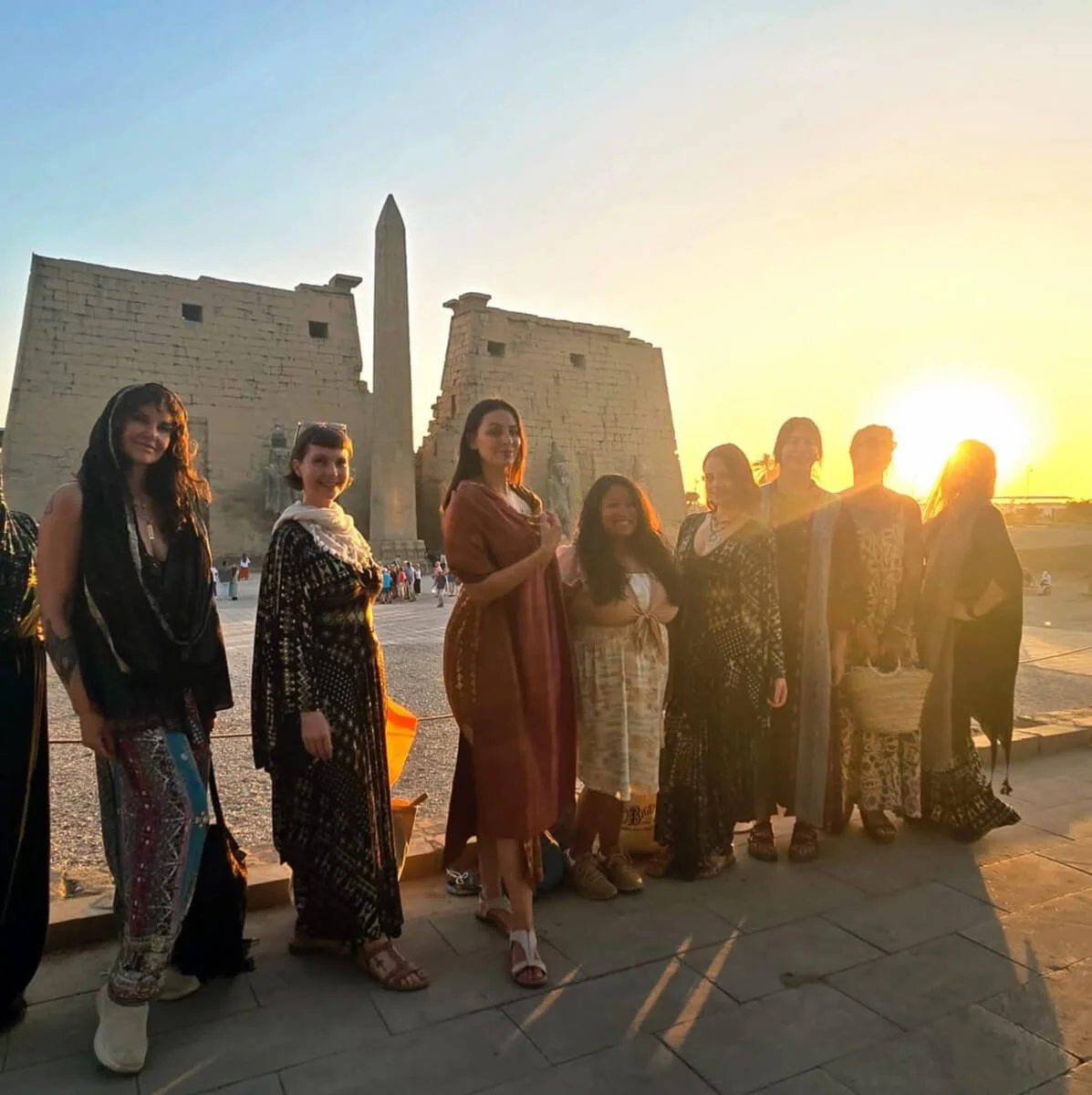
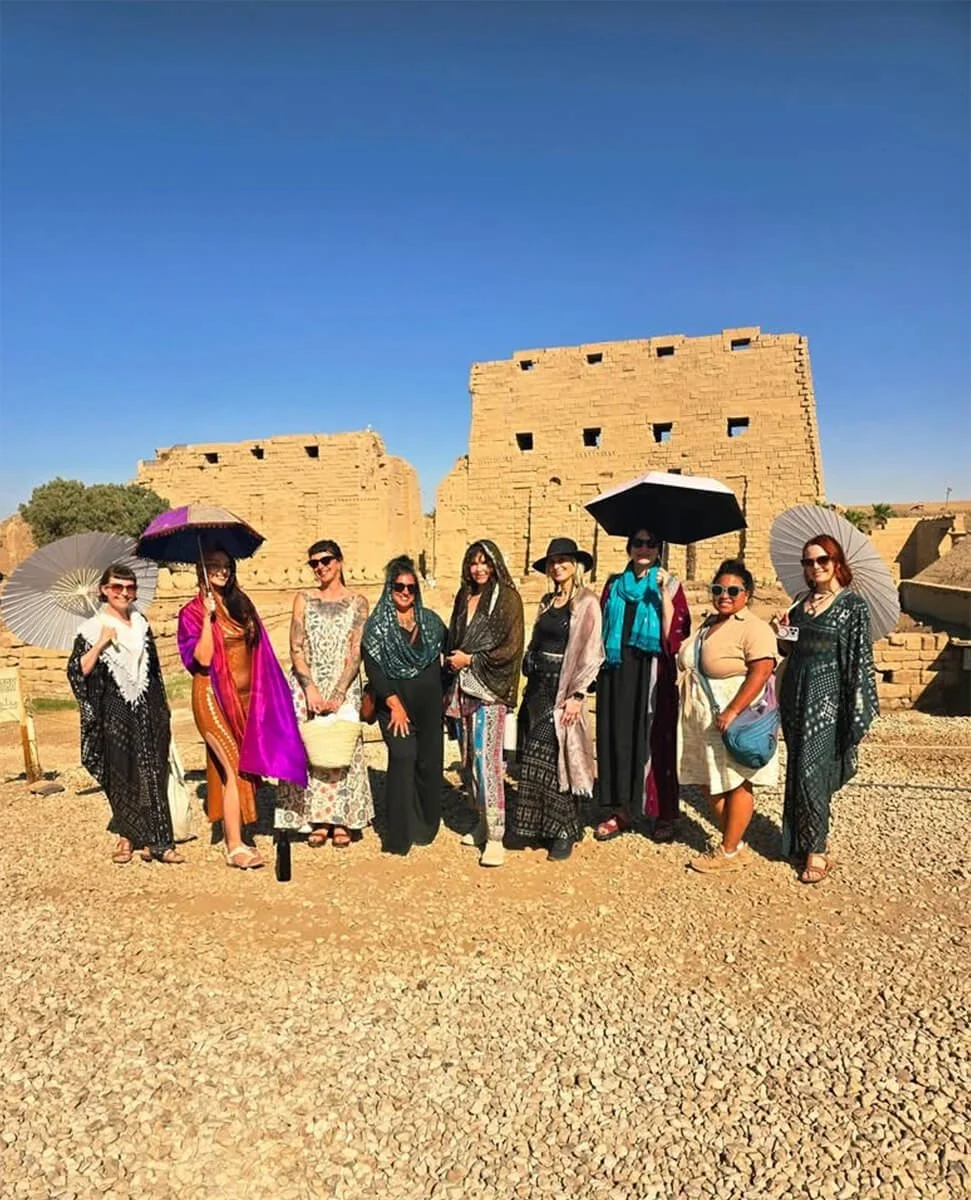
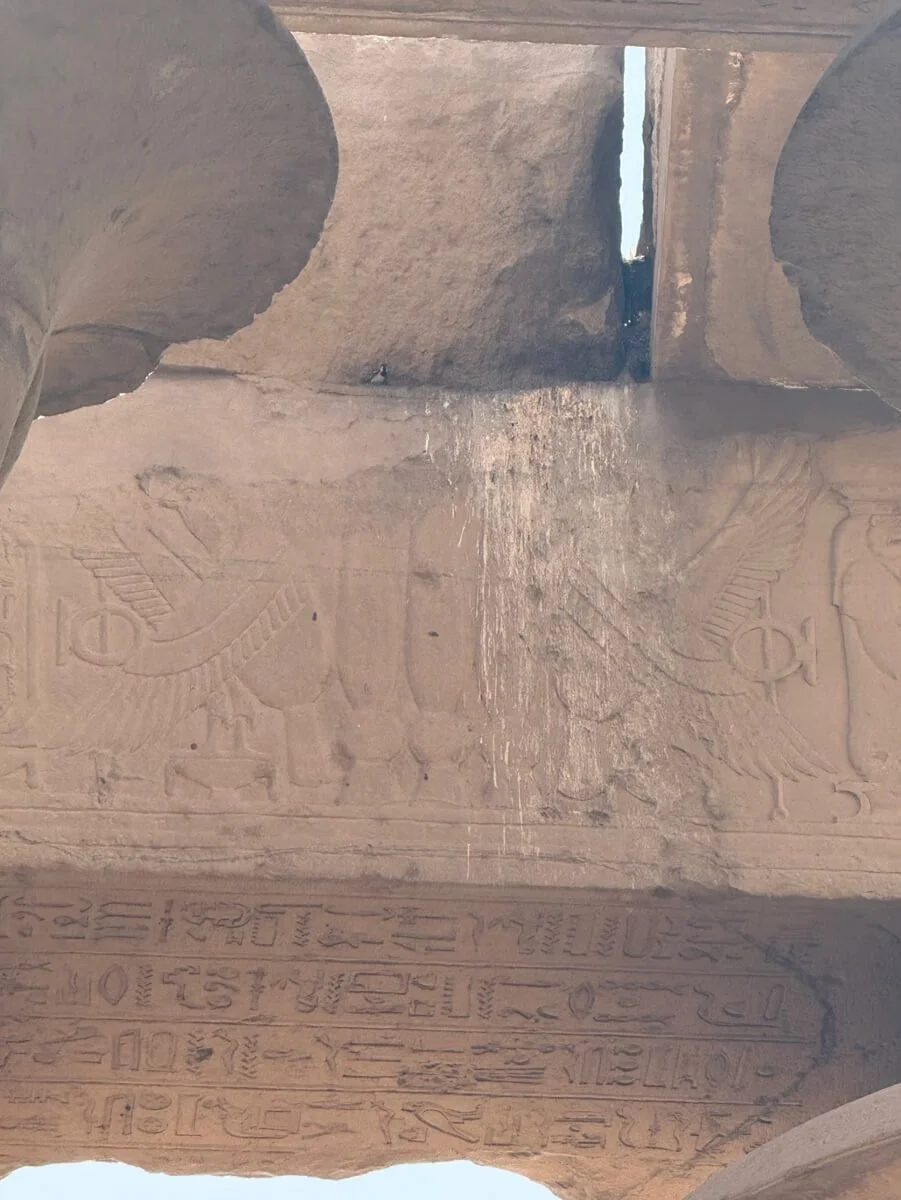
Karnak is one of my favorite temples on earth — I will say that plainly. The scale, the hypostyle hall with its 134 massive columns, the way the late afternoon light falls between them. I have been here more times than I can count and it still moves me every single time. What made this visit even more special: four of the women in this group had journeyed with me before, as part of my 2024 Karnak Sunrise Tour that culminated with the winter solstice sunrise at the temple. Coming back together here felt like a reunion and a continuation at the same time.
Then on to Luxor Temple, where among other things we spent some time appreciating the audacity of the Greek and Roman graffiti carved directly into the ancient walls by soldiers and travelers who apparently felt compelled to leave their mark on one of the greatest monuments ever built. The Greco-Roman invaders did many things in Egypt. Restraint was not among them.
The following morning brought the Mortuary Temple of Hatshepsut at Deir el-Bahari — carved directly into the cliff face in elegant terraced colonnades that feel shockingly modern against the ancient rock. Hatshepsut: female pharaoh, master builder, visionary ruler — the original girl boss. She built one of the most beautiful structures in the ancient world, ran one of Egypt's most prosperous eras, and her successors were so threatened by her legacy that they spent considerable effort trying to erase her from history. They failed. She is still very much here. We felt her.
“Hatshepsut built one of the most beautiful structures in the ancient world. Her successors tried to erase her. They failed. She is still very much here.”
Chapter Four
Setting Sail · Four Days on the Nubian Dahabeya
Then came what many named as the quiet peak of the entire journey: boarding our Nubian dahabeya and surrendering to the Nile. 4 days · 3 nights
A dahabeya is a traditional Egyptian sailing vessel — graceful, wooden, unhurried. Ours was crewed and captained by Nubian men whose families have worked this river for generations, and we had our own band from Luxor on board for the entire cruise, playing Egyptian classics and medleys every evening. Each night we banked for candlelit live music under the stars. One night our entire dinner buffet was brought Nile-side — off the boat, on the bank, the river right there beside us and the music going. That is an evening I will not forget.
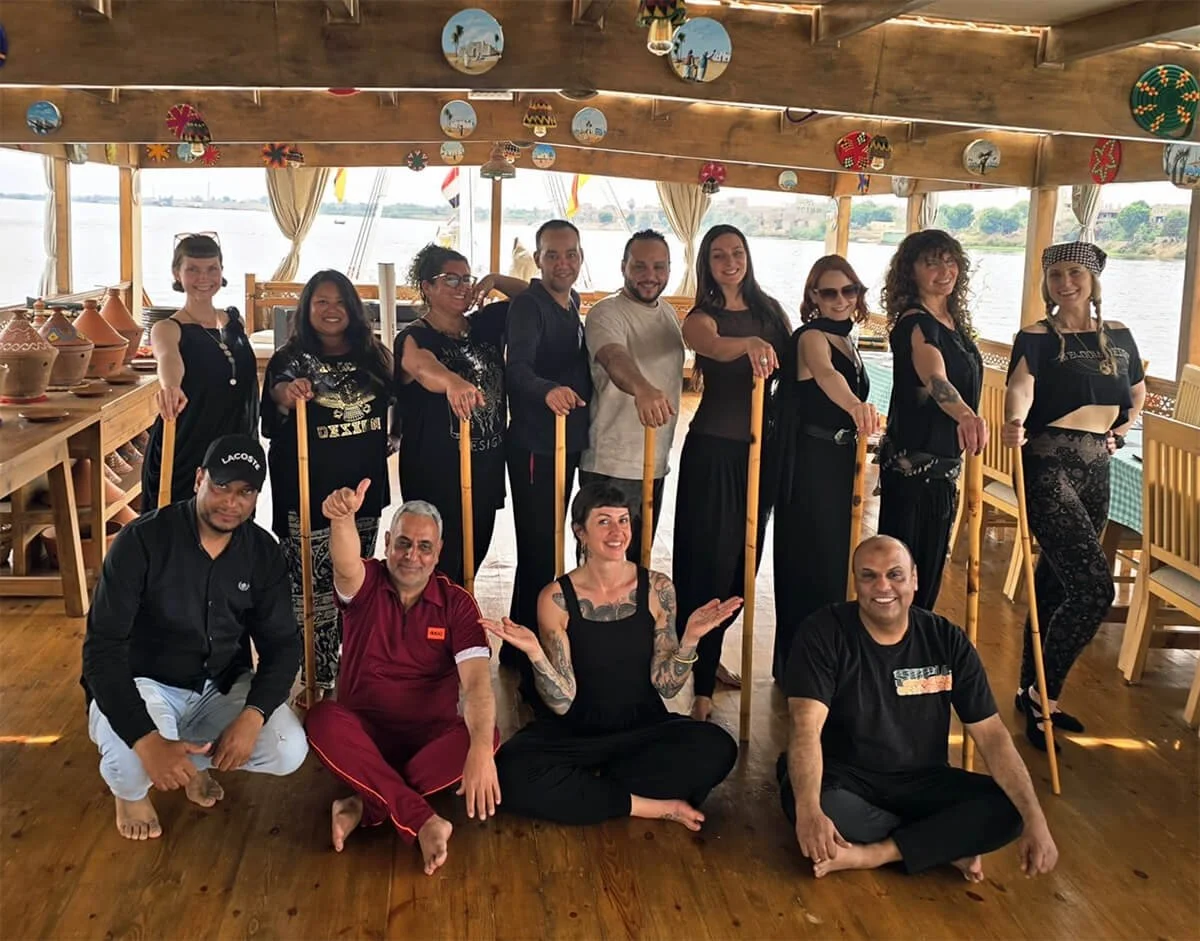
On our very first day on the water, my dear teacher Hamdi came aboard. Hamdi has been my assaya teacher for many years, and he is one of the most extraordinary embodiments of the Saidi tahtib I have ever witnessed — he moves with the cane the way very few people in the world can, with a masculine grace that is completely natural and completely earned. The tahtib is a form I have taught and practiced for nearly two decades. I have shared it in many places around the world. But dancing it on the deck of a wooden boat with the Nile opening on either side of us, with our band playing, with this group — I was overwhelmed. Not by the dance itself, which I know deeply, but by the convergence of bringing it here, to this water, in this moment. It was a feeling and a view I will never forget.
We stopped at Edfu, home to the Temple of Horus — one of the best-preserved temples in all of Egypt, its massive pylons and darkened inner sanctuaries still holding an atmosphere of active ritual. Then Kom Ombo, the double temple perched directly on the Nile bank, dedicated simultaneously to Sobek and Horus — its unusual mirrored symmetry giving it an otherworldly quality unlike anything else along the river. We arrived at both at exactly the right time of day.
On the last morning on the water I led a movement workshop on deck — bodies that had been carried by the river for days, now moving, integrating, returning to themselves. It was a very beautiful morning and a fitting way to close the chapter before Aswan.
Chapter Five
Aswan · Raw Music & the Temple of Isis
Our Luxor band went home — but Aswan had its own answer. That first evening brought a live Nubian music performance that was something else entirely: raw, electric, deeply rooted. This was not background music. It went straight past the thinking mind and into the body. A desert rock concert in the oldest sense of both words.
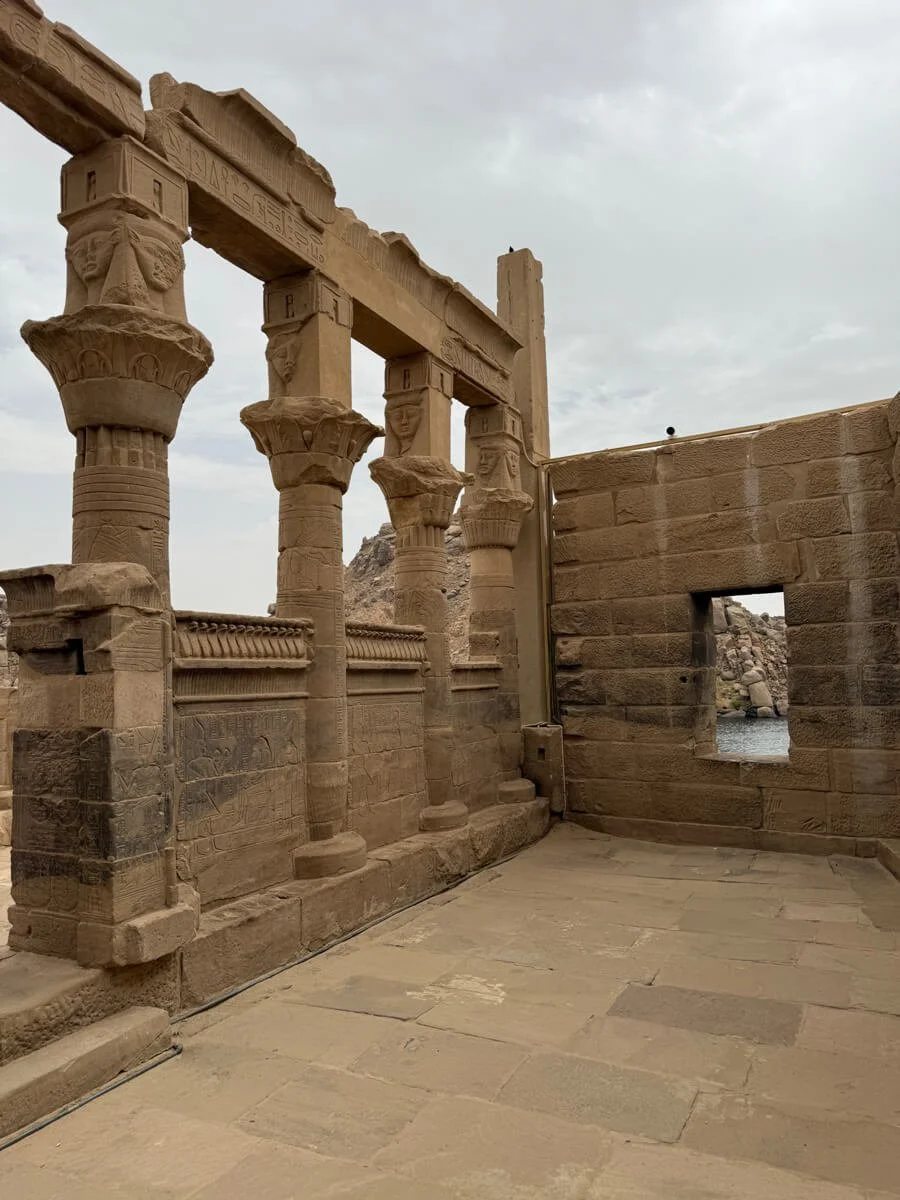
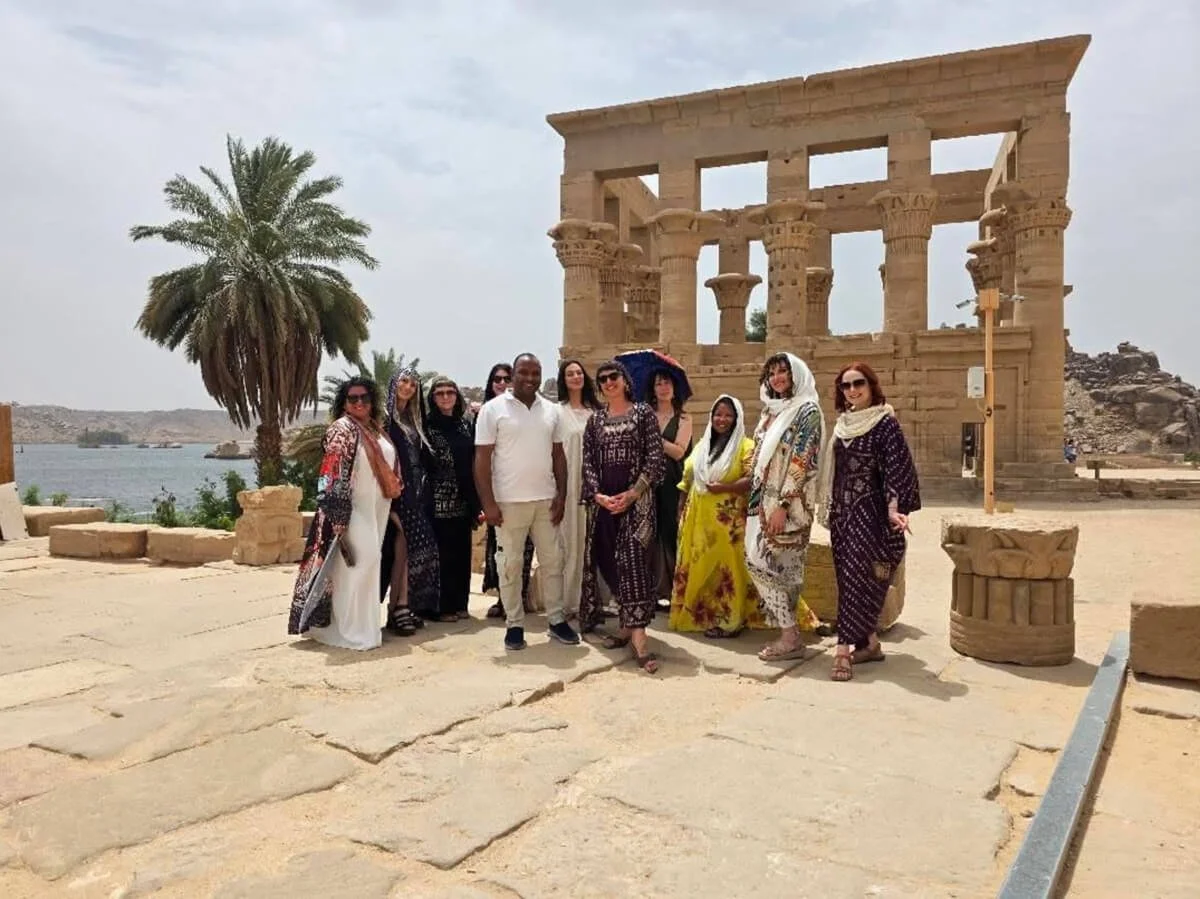
And then, finally, Philae Temple — the island sanctuary of Isis herself. You reach it by small boat across the reservoir, and the temple rises from the water as you approach, its pylons and colonnades reflected perfectly in the surface below. I have brought many groups here over the years. It does not stop being extraordinary.
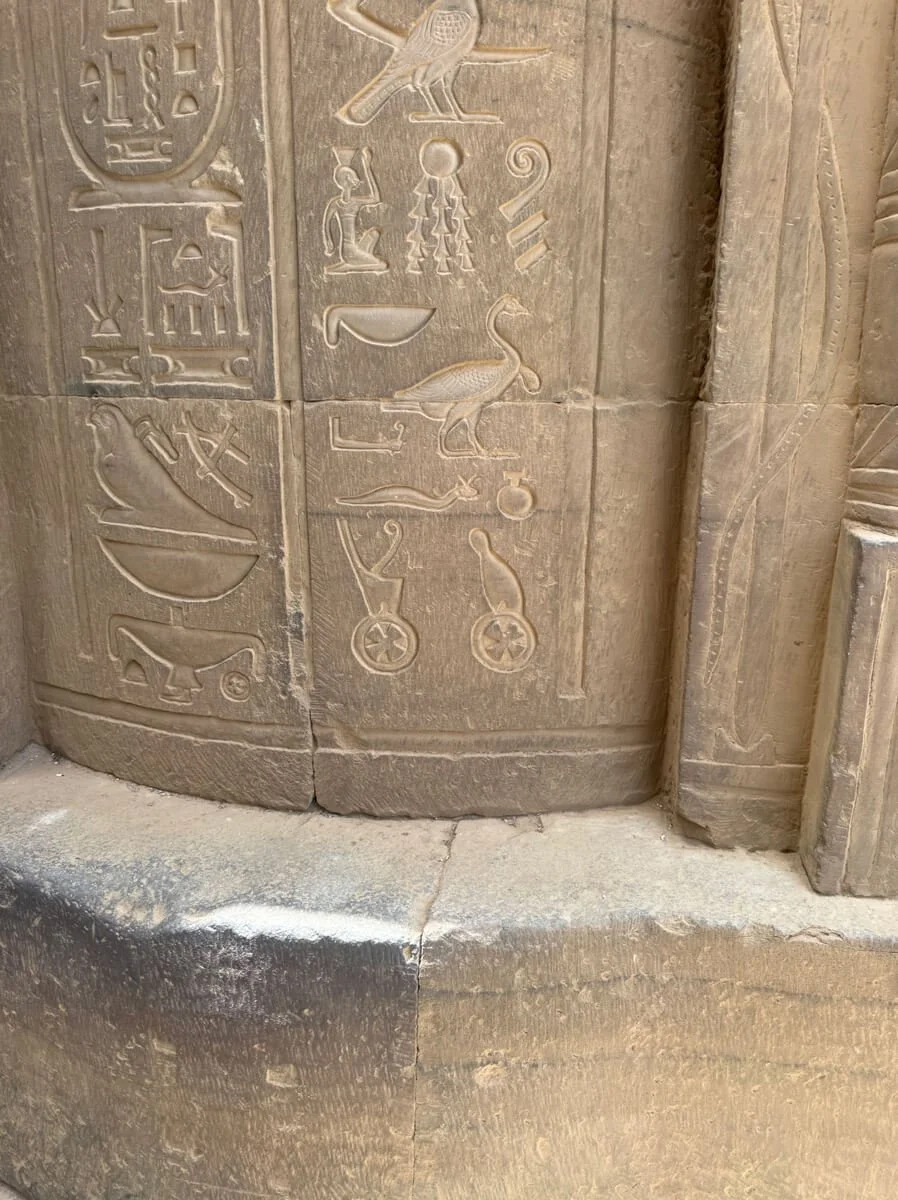
Philae was the last temple in Egypt where the ancient religion was actively practiced — its priests continuing their rites until the 6th century AD. There is something in the atmosphere that acknowledges this: a sense of lingering presence, of something that did not want to leave. We spent the morning moving through its halls slowly, reading the carved reliefs of Isis mourning Osiris, gathering his scattered pieces, breathing life back into what was lost. After everything this tour had been — the desert, the tombs, the river, the dancing, the music — it was the exactly right note on which to end.
ISIS Oracle 2026 at a Glance
Fourteen Days · Five Different Worlds · One Thread
I
Cairo
First night under Khufu at the House of Kheops. Breakfast at the pyramids. The Grand Egyptian Museum.
II
Siwa Oasis
4 days. Morning yoga, hot springs, salt lakes, salt cave, the Siwi people, and the Oracle Temple.
III
Luxor
Valley of the Kings, Karnak, Luxor Temple, Hatshepsut's temple at Deir el-Bahari. Deep local connections.
IV
The Nile
4 days on a Nubian dahabeya. Private band, Saidi tahtib with Hamdi, Edfu, Kom Ombo, movement workshop on deck.
V
Aswan
Live Nubian concert. Philae Temple — island sanctuary of Isis. The end of the pilgrimage.
With Deep Gratitude
The People Who Made It Real
A journey like this does not happen because of good planning. It happens because of the people who show up — fully, generously, with their whole hearts — and make something extraordinary together.
To my extraordinary team on the ground: your knowledge, patience, warmth, and willingness to hold it all together was the backbone of everything. You carried this group with grace. I am endlessly grateful.
To our local guides, drivers, hosts, musicians, and the communities who welcomed us in Siwa, in Luxor, on the river, and in Aswan — thank you for sharing your world. You were the best part of every single day.
And to the guests of ISIS Oracle 2026 — the Californians who said yes, who packed light and traveled deep, who floated in salt lakes and stood in awe in painted tombs and danced the tahtib on a wooden boat as the stars came out over the Nile:
You came into my world and you really showed up for it. Thank you. This tour lives in me because of you.
Come in 2027
ISIS Oracle Returns · 2027
If you want a curated tour that is heavy on culture, real connections, authentic experiences, and yes — a lot of fun — reach out. I design every itinerary personally. We are now booking into 2029.
Limited places · Now booking into 2029
Want to go deeper still? There is another way to come to Egypt. Stay tuned — the next post is all about earning your 200-hour yoga teacher certification with a 100-hour intensive in the shadow of the pyramids themselves.
Egypt does not let you leave unchanged. That is not a warning — it is the whole point.
Until next time, beneath the same ancient sun.
With love from Cairo